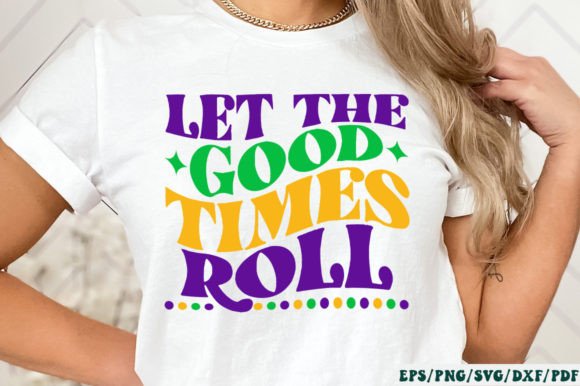
Let the Good Times Roll Retro SVG Review
As a designer who spends more time than I care to admit tweaking stitch paths and judging thread tension, I approach every new digital asset with a healthy dose of skepticism. The market is flooded with generic clip art disguised as professional embroidery files, but Let the Good Times Roll Retro SVG caught my eye for a different reason. It isn’t just another festive graphic; it carries a specific visual weight that suggests it was built with actual production in mind. When I first opened the zipped folder containing the SVG, DXF, PNG, EPS, and PDF formats, I wasn’t looking at a simple decoration. I was looking at a potential cornerstone for a seasonal collection.
The immediate impression is one of confident nostalgia. The retro aesthetic doesn’t feel forced or dated; instead, it taps into that warm, inviting vibe that works exceptionally well for handmade products. For an embroidery project, this translates to clean lines and a layout that breathes. In my experience, designs that are too cluttered often turn into muddy blobs once stitched out, especially on stretchy fabrics like jersey or thin cottons used for tea towels. This design avoids that pitfall by maintaining distinct negative space, which is crucial for clarity when converting vector graphics into machine-readable code.
From Screen to Stitch: Real-World Application
I decided to test how this file would perform not just as a digital mockup, but as a physical product. My scenario involved creating a line of custom embroidered tote bags for a local craft fair, targeting holiday shoppers and boutique owners looking for unique, personalized gifts. The goal was to create something that felt substantial enough to justify a higher price point but versatile enough to appeal to a broad audience.
When I imported the SVG into Cricut Design Space and then transferred the vector path to my embroidery software, the scalability was impressive. Because it is a true vector file, I could resize it without losing edge definition. I placed the design on a heavy-duty canvas tote, centered and slightly offset to give it a modern, asymmetrical look. The result was striking. The bold curves of the typography and the accompanying graphical elements held up beautifully against the rough texture of the canvas. It didn’t get lost in the weave, nor did it look overly dense.
This same logic applies to other custom apparel items. Imagine this design on a heavyweight sweatshirt for a family reunion or a group of friends celebrating a milestone birthday. The retro theme naturally evokes a sense of community and fun, making it an excellent choice for personalized gifts. On softer fabrics like fleece or brushed cotton, the design’s clean edges help prevent the "pillow effect" where the fabric bunches up around the stitching. However, this brings us to the importance of choosing the right stabilizer. A tear-away might not be enough for a large, dense area, so a cut-away stabilizer is likely necessary to maintain the integrity of the embroidery project over time.
Visual Appeal and Brand Consistency
For Etsy sellers and small business owners, visual consistency is everything. Buyers scroll quickly, and they need to trust the quality of your work before they click "buy." A design like Let the Good Times Roll Retro SVG projects professionalism. It doesn’t look like a rushed job. The balance between the text and the decorative elements creates a cohesive brand identity that can be replicated across multiple products—from kitchen towels to nursery decor.
The color palette suggested by the retro theme lends itself well to high-contrast thread choices. I experimented with gold metallic thread for the accents against a deep navy background, and the contrast popped in a way that photographs incredibly well for social media marketing. This is vital for printable mockups and digital product previews. If the design looks good in a black-and-white sketch, it will almost certainly look great in full color. Testing the design in grayscale helps you verify that the shapes are distinct enough to be recognized even if the customer prints it themselves or uses monochrome thread.
Practical Designer Notes and Pitfalls
While the design has strong potential, no file is perfect for every situation. As an experienced reviewer, I have to point out where caution is needed. First, always check the stitch density. While the vector looks clean, some conversion algorithms may interpret certain curves as overly dense fill stitches. If the underlay is too aggressive, it can pucker thin fabrics like voile or lightweight polyester. Always run a test stitch-out on scrap fabric that matches the final product’s weight and stretch.
Another critical consideration is the hoop size. Large designs require larger hoops, which can limit where you can place the artwork on garments like caps or fitted dresses. If you are planning to use this on curved surfaces, such as a baseball cap front panel, ensure that the design’s dimensions fit within your machine’s standard hoop constraints. You may need to split the design or reduce the scale, which could impact the legibility of smaller details.
Fabric texture also plays a huge role. On highly textured fabrics like terry cloth or thick denim, fine details can disappear. This design relies on bold shapes, which is a strength, but if there are tiny decorative accents or small lettering, they might get swallowed by the fabric’s nap. In such cases, a smooth backing fabric or a tightly woven stabilizer underneath is essential to provide a flat canvas for the needle to pierce.
Commercial Viability and Licensing
For those of us running a craft business, the commercial rights are just as important as the aesthetics. Before adding this to your inventory of design assets, you must confirm the licensing terms. Does the purchase allow for unlimited sales of finished goods? Can you sell digital downloads of the converted file? These distinctions matter immensely for long-term sustainability. Assuming the license permits commercial use, this file offers high ROI because of its versatility. It fits seamlessly into categories like holiday embroidery, wedding favors, and corporate team-building gifts.
Ultimately, Let the Good Times Roll Retro SVG is more than just a cute graphic. It is a functional tool for designers who understand that a successful embroidery file requires a marriage of artistic vision and technical precision. By testing thoroughly, respecting fabric limitations, and leveraging its strong visual personality, you can create handmade products that stand out in a crowded marketplace. Whether you are decorating a tote bag design for a summer festival or creating a cozy sweatshirt embroidery piece for winter, this file provides a solid foundation for creative success.
In conclusion, this design earns its place in my library. It is clean, adaptable, and emotionally resonant. Just remember: the best embroidery comes from preparation. Check your thread colors, inspect your stabilizer choice, and never skip the test stitch. When done right, the result is a finished product that customers will cherish and display with pride.